 German cockroach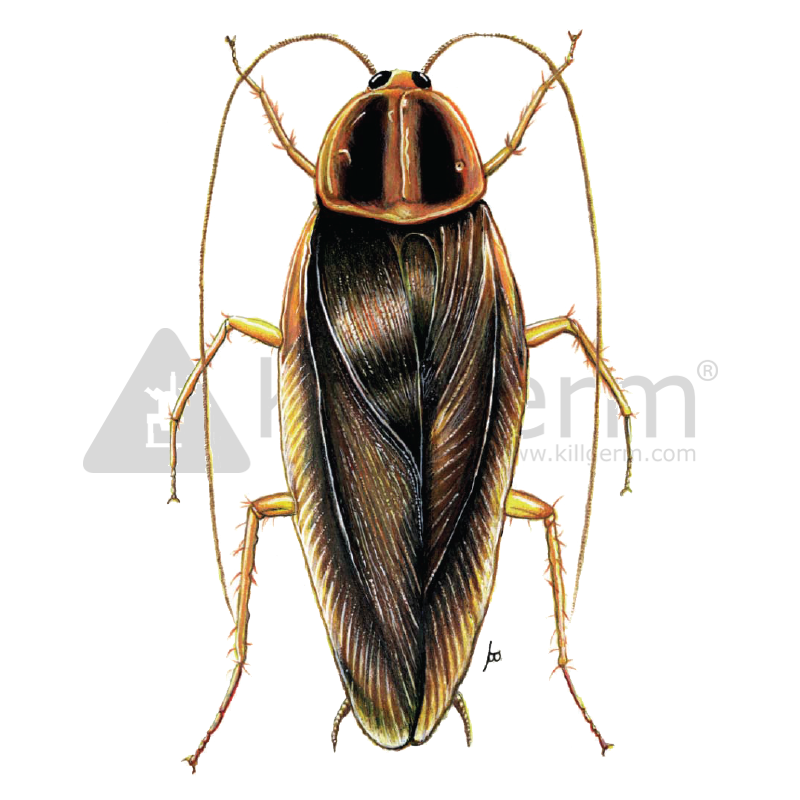
German cockroach
Latin
Blattella germanica
Stats
The adult is light brown in colour with two dark almost parallel longitudinal stripes on the pronotal shield.
Appearance
The female is darker than the male and with a broader abdomen. Both male and female adults are fully winged. Early instar nymphs have a pale area centrally on the dorsal thorax. Later instars have two dark longitudinal stripes on the pronotum.
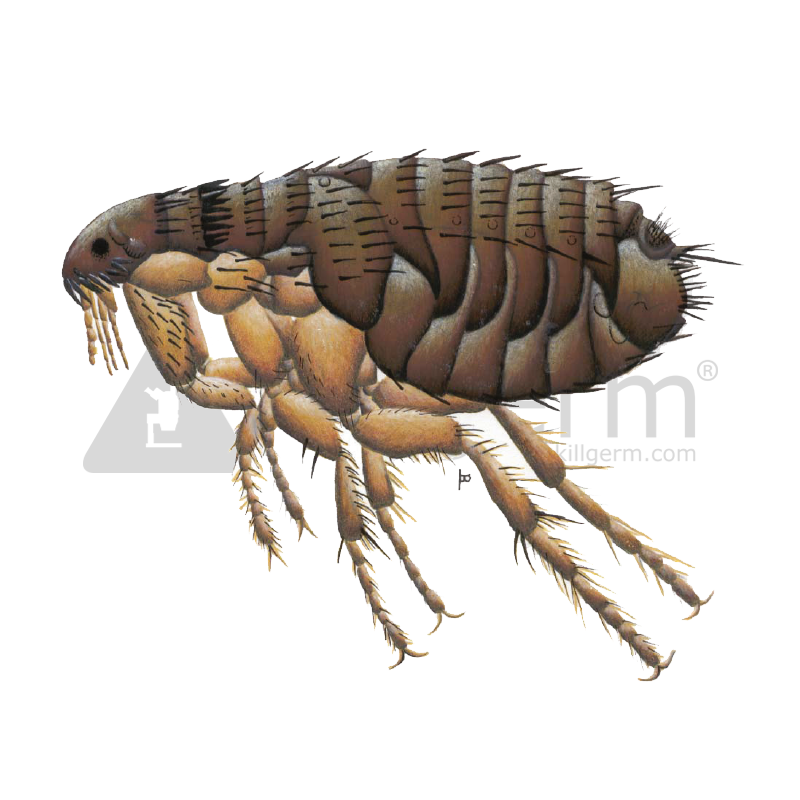
Cat flea
Latin
Ctenocephalides felis felis
Stats
The cat flea is small at around 2 mm long, reddish brown in colour and is flattened laterally, a feature which enables it to move easily amongst the hair of its vertebrate host.
Appearance
The most distinctive features of the cat flea are the large jumping legs and the row of black non- sensory spines on the front margin of the head and on the rear of the first thoracic segment. These bristles or combs are a diagnostic feature of the cat flea. The eyes are apparent as are the antennae, and the mouthparts, adapted for piercing and sucking, are typically seen projecting downwards from the head.
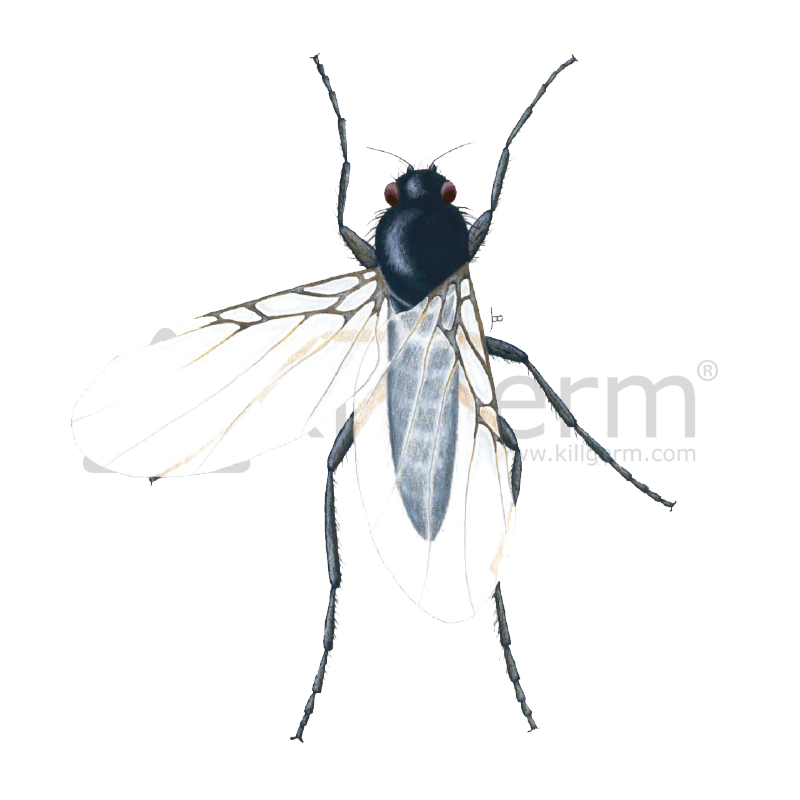
Scuttle flies, Phorid flies
Latin
Family Phoridae
Stats
The adult flies are around 3 – 4 mm in length with a wingspan of 9 – 10 mm.
Appearance
The thorax of the flies is usually dark brown/tan in colour with a distinctive humped appearance. Wings have no cross veins and apart from the two veins on the leading margin of the wings, there are only four veins leading from the hindmost of the veins on the leading edge to the hind margin of the wing.
American cockroach
Latin
Periplaneta americana
Stats
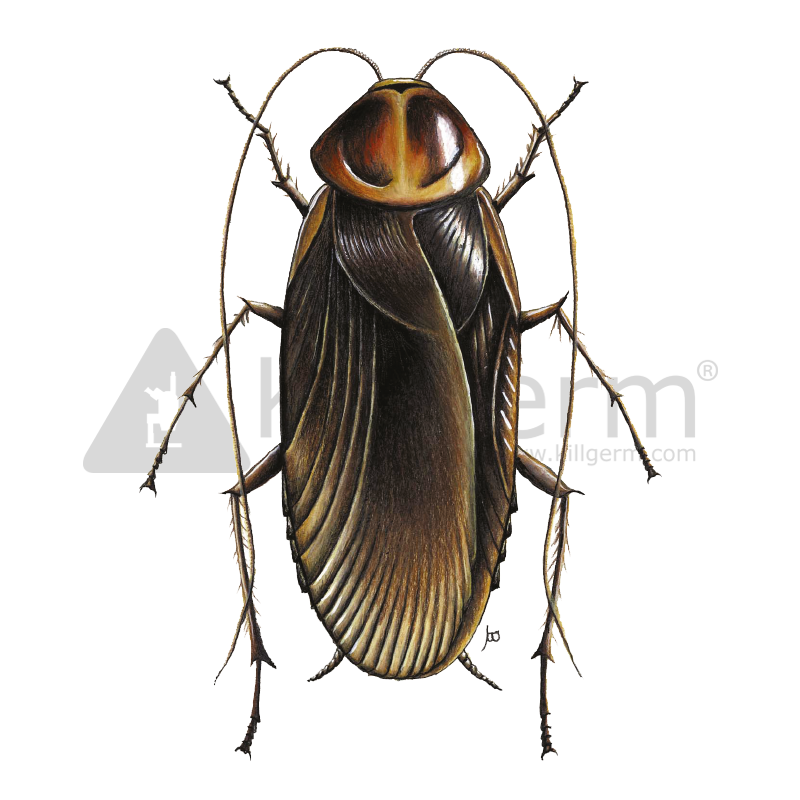
The adult American cockroach is reddish brown in colour and is fully winged.
Appearance
Male wings extend beyond the tip of the abdomen; female wings do not. There is a pale brown to yellowish band around the edges of the pronotum.
Fruit flies
Latin
Drosophila spp
Stats
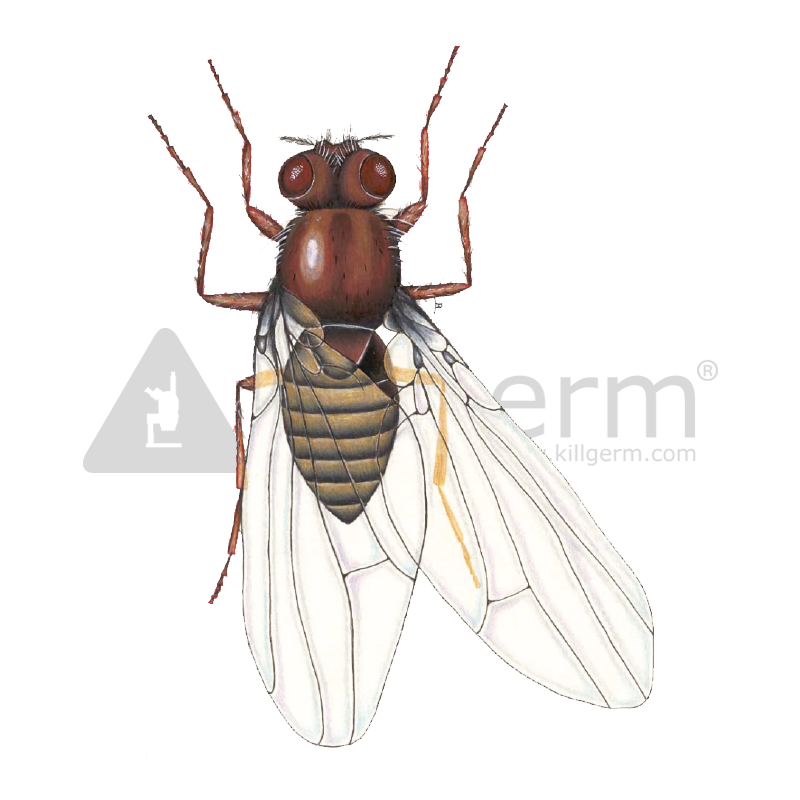
The fruit fly adults are small yellowish/brown flies with darkly striped abdomen.
Appearance
The prominent compound eyes are generally red in colour, although darker variants occur. The wings have two clear notches in the front border, which can clearly be seen with a hand lens.
Common housefly
Latin
Musca domestica
Stats
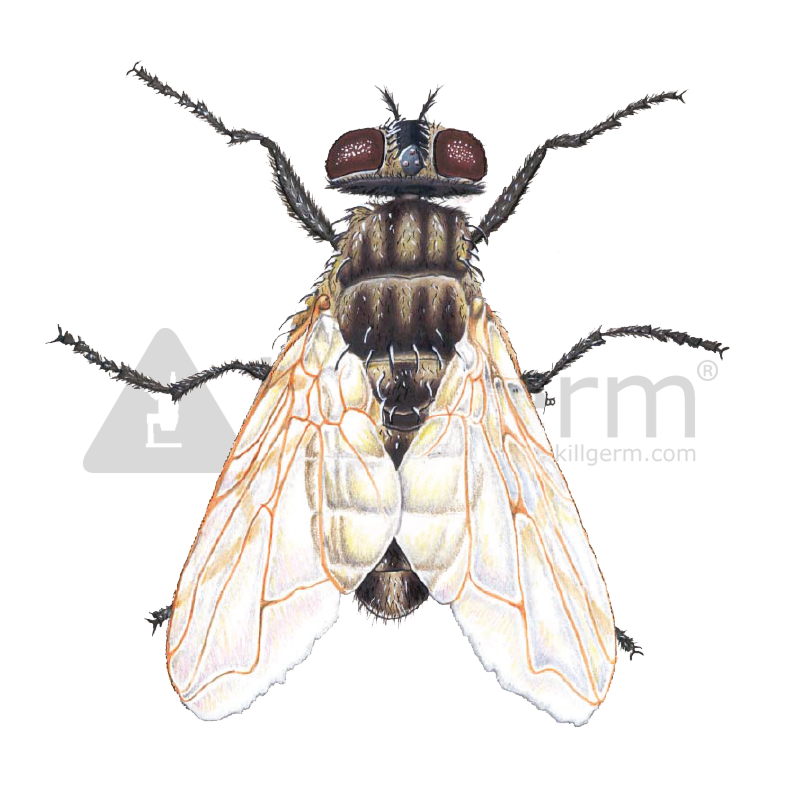
Adults are 6 – 8 mm long. Wing span is 13 – 15 mm.
Appearance
The thorax is grey with four longitudinal dark stripes. The fourth vein on the wing bends sharply forward, almost reaching the third vein. The sides of the abdomen are yellowish and may be transparent. A central dark band broadens at the back to cover the final abdominal segments. The pupa is about 6 mm long and may be yellow, brown or black. The larva is a typical maggot. It undergoes larval moults, gradually increasing in size and changing colour from white to cream.
Oriental cockroach
Latin
Blatta orientalis
Stats
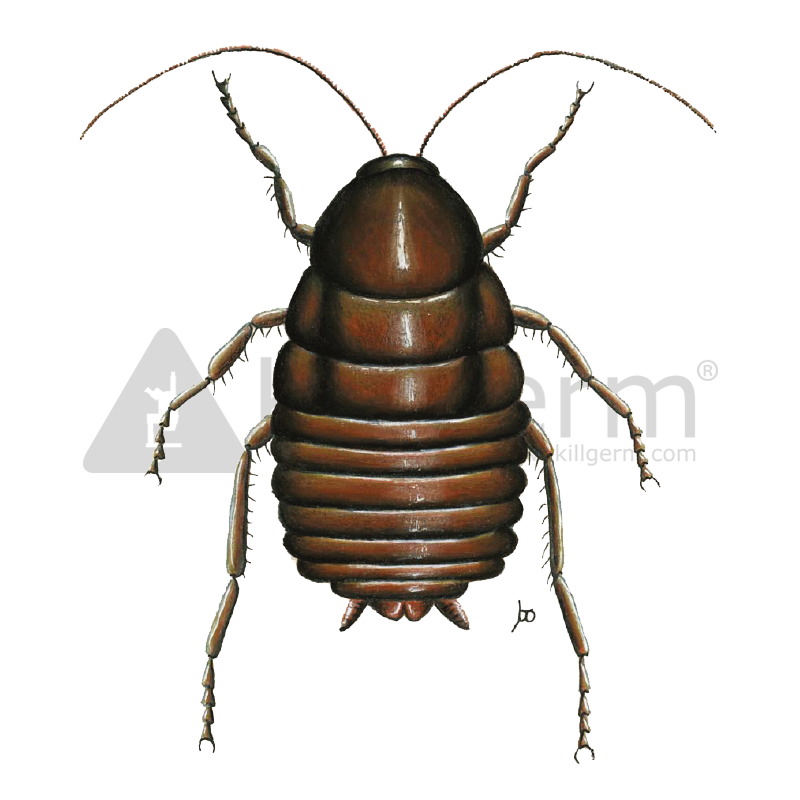
The male cockroaches are approximately 25mm long with females 32mm long.
Appearance
Both sexes are shiny and very dark brown, nearly black, in appearance. However, the early instar nymphs may be reddish-brown.
The distinctive shape of the wings is noticeable in this species. In the males they cover approximately two thirds of the abdomen, whereas those of the female are vestigial.
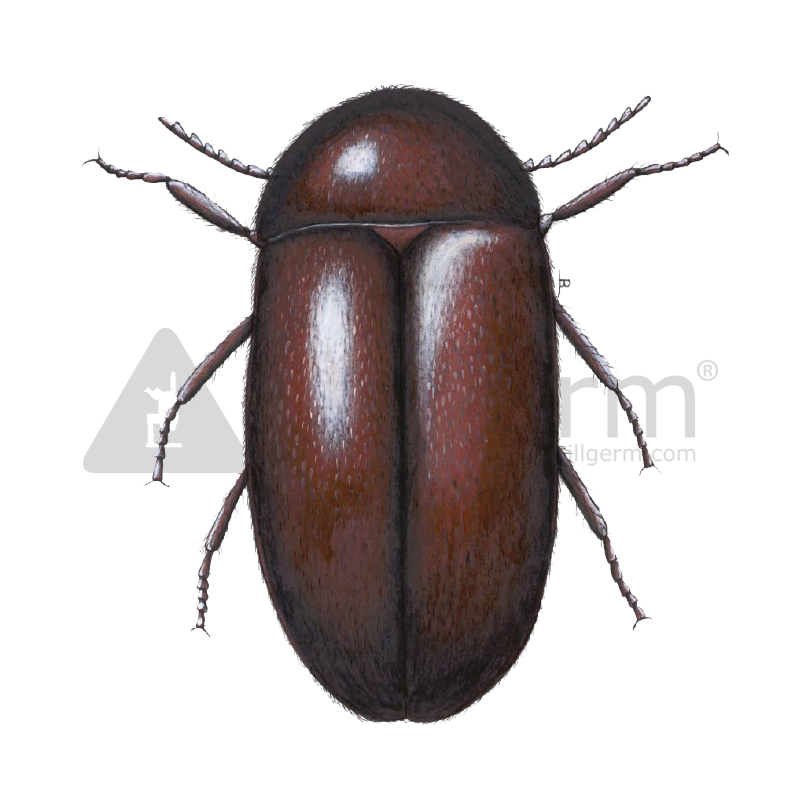
Tobacco beetle, Cigarette beetle
Latin
Lasioderma serricorne
Stats
The adult beetle is 2 to 3 mm in length, reddish brown in colour and has a domed ovoid shape. The head is hidden under a hood-like prothorax.
Appearance
It is easily mistaken for the common furniture beetle, Anobium punctatum, or the biscuit beetle, Stegobium paniceum. Each female produces 45-115 eggs.
The larva builds a cell of food fragments in which to pupate. The larvae are active when newly hatched, gradually becoming fleshy and sessile. They moult five or more times. Larvae shun the light.
The adult beetle flies well if the temperature is high enough and thus infestation may rapidly spread from the original source.
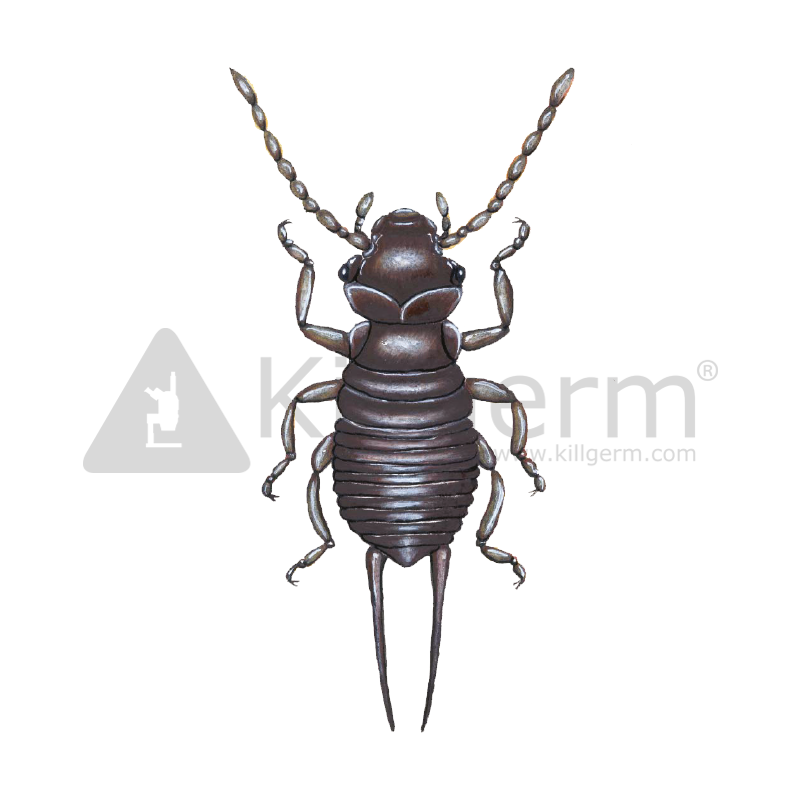
Common earwig
Latin
Forficula auricularia
Stats
The adults are elongate, dark brown insects that have biting mouthparts and are around 14 – 20 mm long.
Appearance
These insects have non-functional forewings and highly folded membranous hind-wings which have rounded edges and, in fact, it is believed give the name to the insect since they are the shape of human ears, hence, “earwing” – earwig.
Another distinctive feature of these insects is the highly sclerotinized forceps or pincers present on the posterior of the insects.
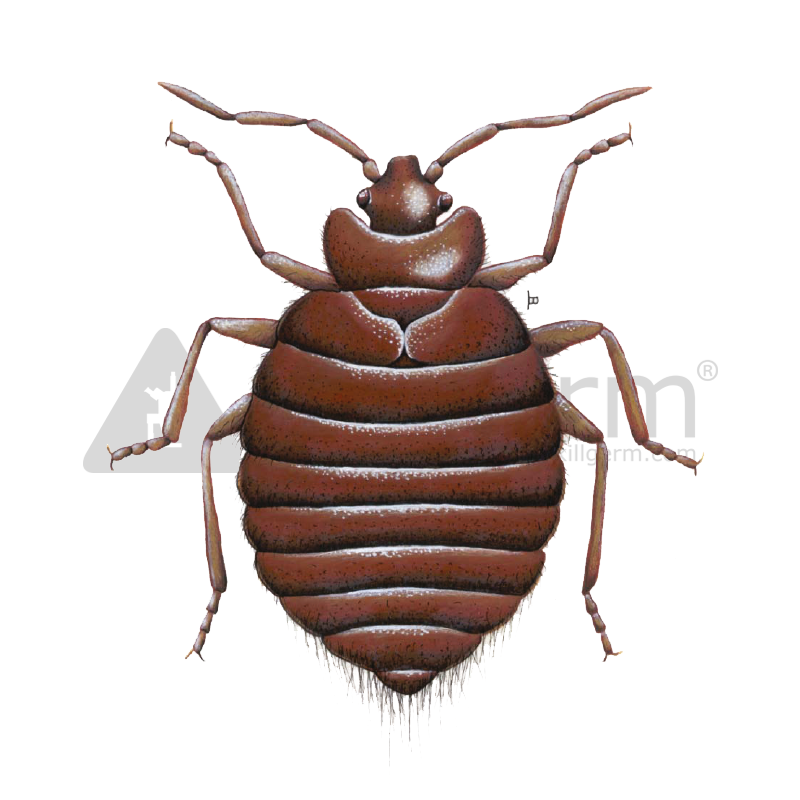
Common bedbug
Latin
Cimex lectularius
Stats
Adult bedbugs are 4-5 mm in length, wingless and uniformly mahogany brown in colour. They have long well-developed walking legs with efficient tarsal claws for clinging on to the host during feeding. Prominent antennae project from the head adjacent to the compound eyes
Appearance
Female bedbugs lay eggs throughout their life, an unusual feature in insects. They generally produce around 2 to 3 per day and since they can live for many weeks, indeed months, each female could produce around 400 – 500 eggs during her lifetime. The eggs are deposited all around the environment in which the bedbug is living and are small and white or whitish/yellow about 1 mm long.

Mediterranean flour moth
Latin
Ephestia kuehniella
Stats
The adult is a greyish moth with a pattern of two obscure bands across the forewings. It has a wing span of 18 to 28 mm.
Appearance
In common with other moth species, wing scales are readily lost and wing pattern is therefore an unreliable characteristic for identification. Positive identification requires the study of adult characters such as wing venation, head appendages and abdominal structures for which a stereoscopic microscope is necessary.The mature larva is 15 to 20 mm long and is creamy white with a brown head capsule and brown body markings. There are three pairs of jointed thoracic legs and five pairs of abdominal prolegs.

Argentine ant
Latin
Linepithema humile
Stats
Between 2.2 mm and 3 mm long
Appearance
The worker ant is small, between 2.2 mm and 3 mm long, and dark brown to black in colour. The body segments have the characteristic features of the ant body with a single node separating the thorax from the abdomen. Body hairs are sparse. Workers, when freshly crushed, emit a stale, greasy or musty odour.
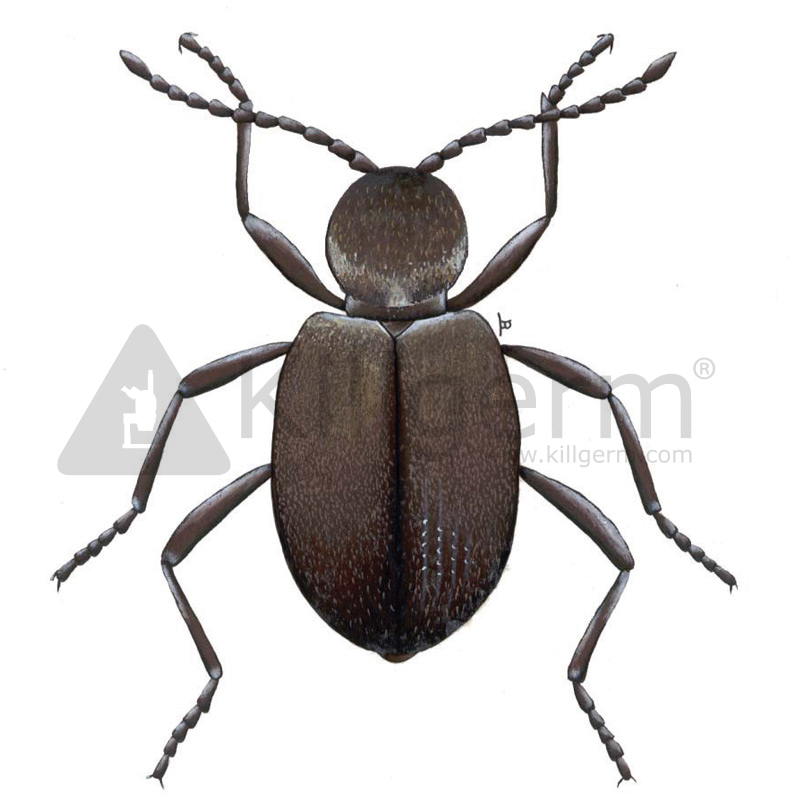
Australian Spider Beetle
Latin
Ptinus tectus
Stats
Adult beetle length 2.5 – 4 mm
Appearance
The middle of the body is constricted to give a waisted spider-like appearance. The legs and antennae are long. The larvae are fleshy, curved and not very mobile. Cryptic in their behaviour, these insects will “play dead” if disturbed.
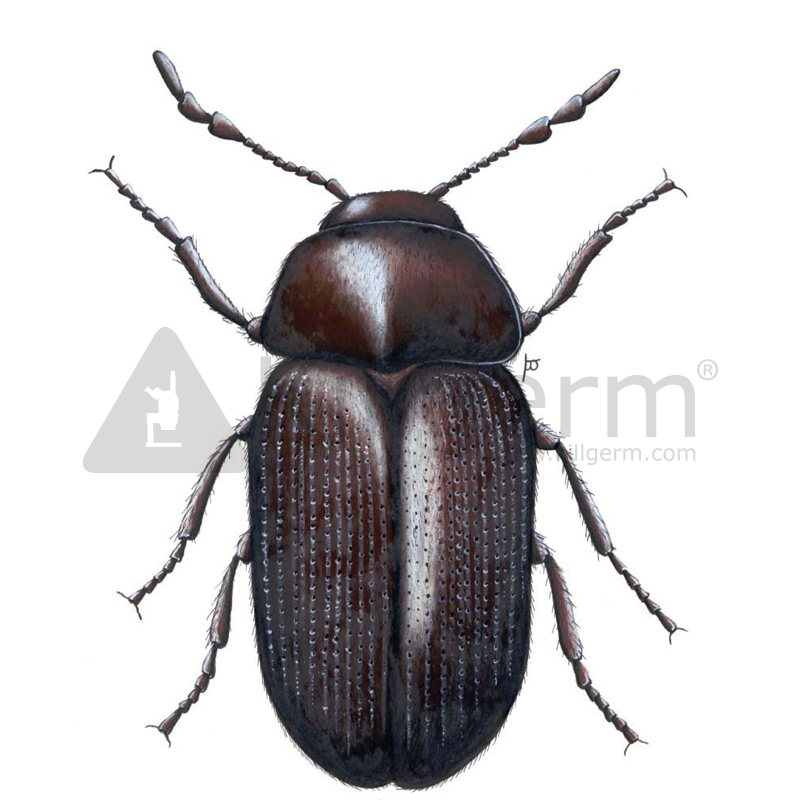
Biscuit beetle, bread beetle, drug store beetle
Latin
Stegobium paniceum
Stats
Adult beetle length 2 – 3 mm
Appearance
Reddish brown, oval beetles, with a dense covering of yellowish hairs. The head is hidden under the hood-like prothorax. Easily mistaken for the common furniture beetle or the cigarette beetle. A fully grown larva is about 5 mm long, initially active but become fat, sluggish and eventually incapable of movement.
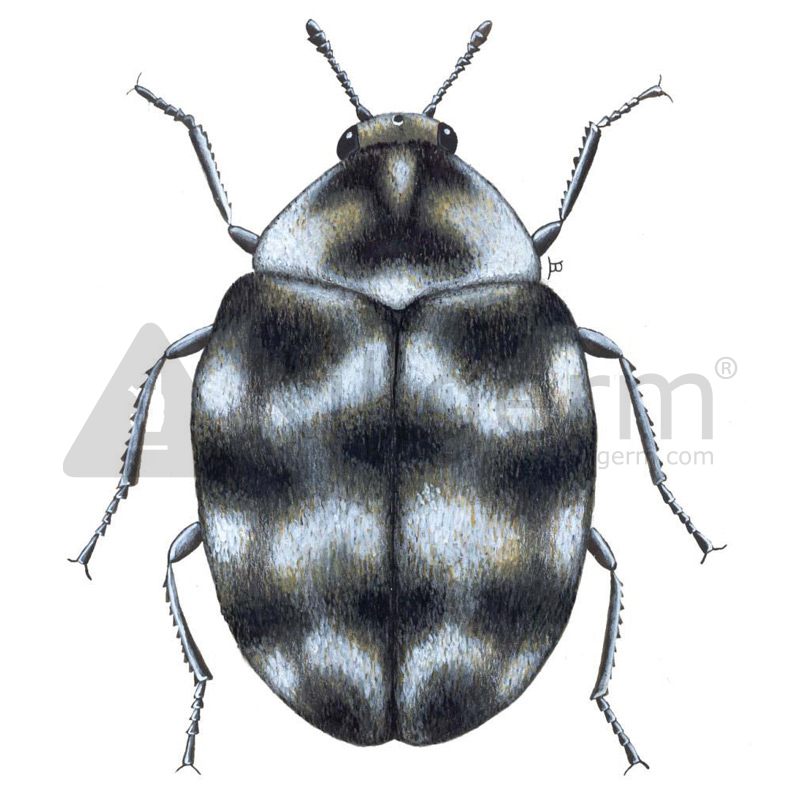
Carpet beetles
Latin
Anthrenus spp
Stats
Adult beetle length 3 mm
Appearance
The varied carpet beetle and the museum beetle are the most commonly encountered by pest controllers. They have a speckled appearance which arises because of the many scales which cover the elytra and the prothorax which are black, white and yellow giving a spotted appearance.
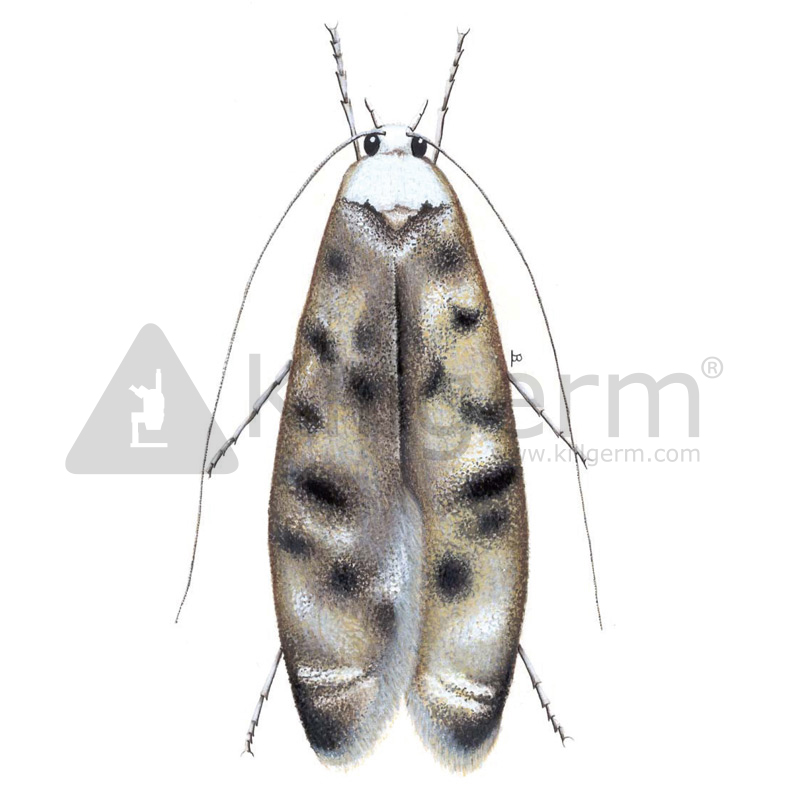
White shouldered house moth
Latin
Endrosis sarcitrella
Stats
Open wing span 10 – 23 mm
Appearance
Readily distinguished from other stored product moths by the covering of white scales on the head and thorax. The shining buff upper side of the forewing is speckled with dark brown.
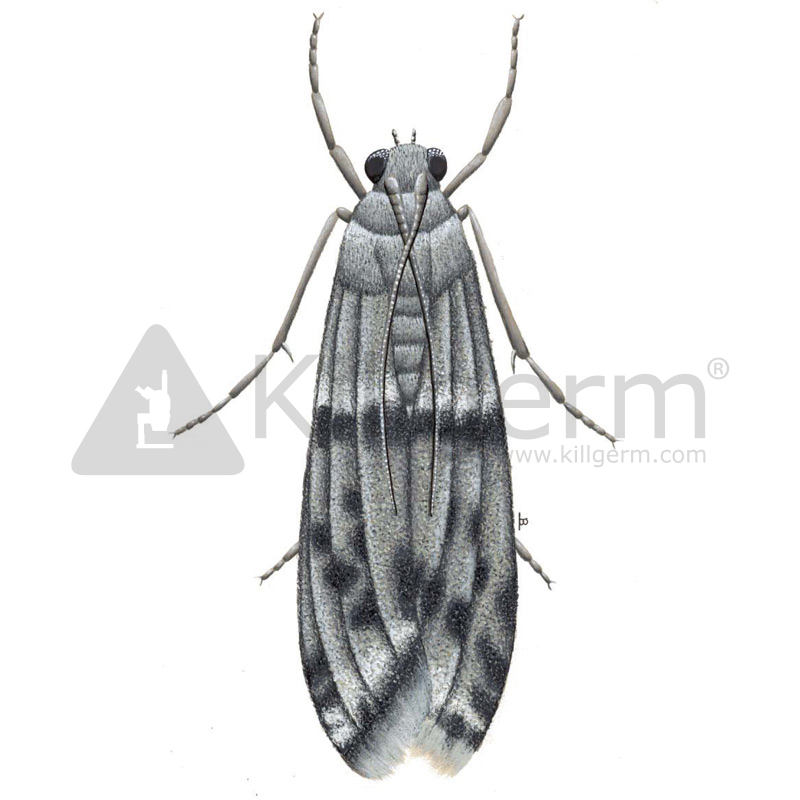
Warehouse moth
Latin
Ephestia elutella
Stats
Wing span 12 – 18 mm
Appearance
The adult is a greyish moth with a pattern of two obscure bands across the forewings. The mature larva is 10 – 15 mm long and is creamy white with a brown head capsule and brown body markings. There are three pairs of pointed thoracic legs and five pairs of abdominal prolegs.
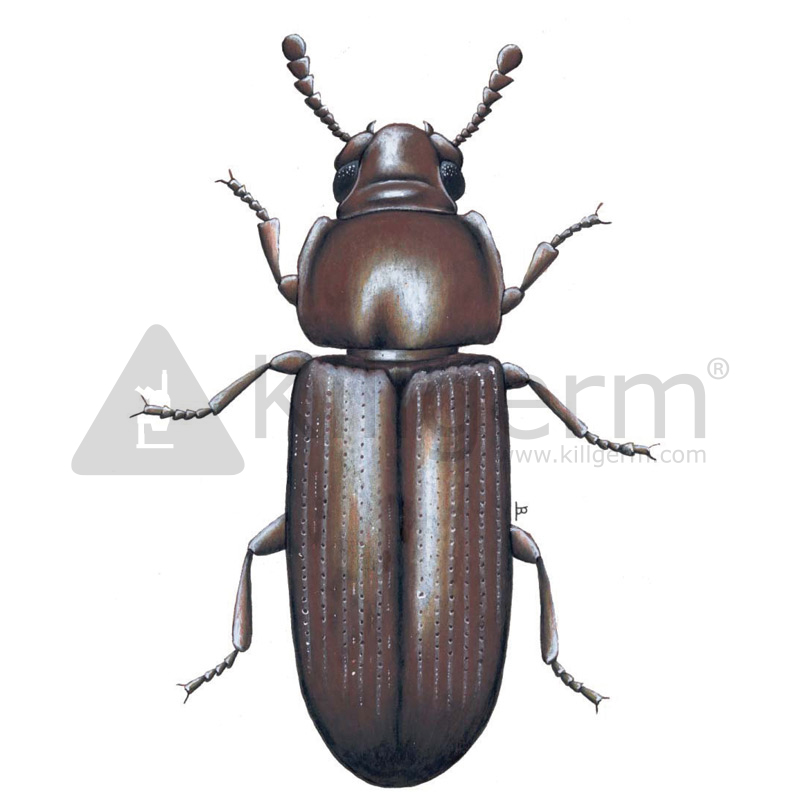
Confused flour beetle
Latin
Tribolium confusum
Stats
Adult beetle length 3 – 4.5 mm
Appearance
The shape is elongated; the antennae have a gradual five segmented club. Easily mistaken for the rust-red flour beetle, which has distinct three clubbed antennae. The cylindrical wiry larva is 4 to 5 mm long when fully grown and is white tinged with yellow. It has a pair of immovable projections, urogomphi, on the final abdominal segment.
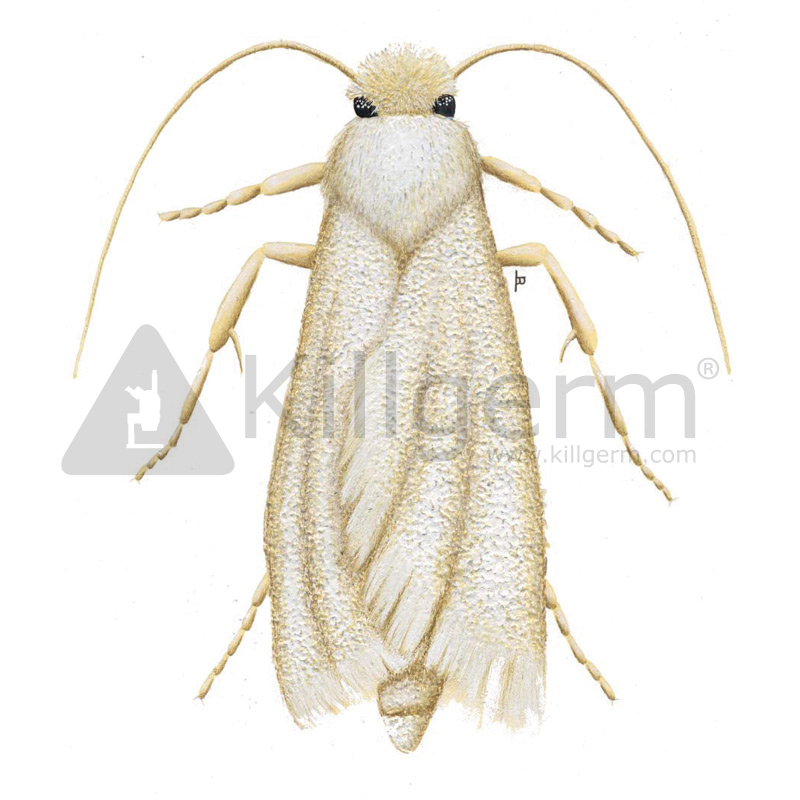
Common clothes moth
Latin
Tineola bisselliella
Stats
Body length 6 – 8 mm.
Wingspan 9 – 16 mm.
Appearance
The upper side of the forewings is buff, nearly golden, in colour. Both pairs of wings have fringed margins. Adults are rarely seen in flight, mostly only the males, and the females after they have deposited their eggs. The larva is yellowish white in colour with a brown head and measures around 10 mm in length when fully mature.
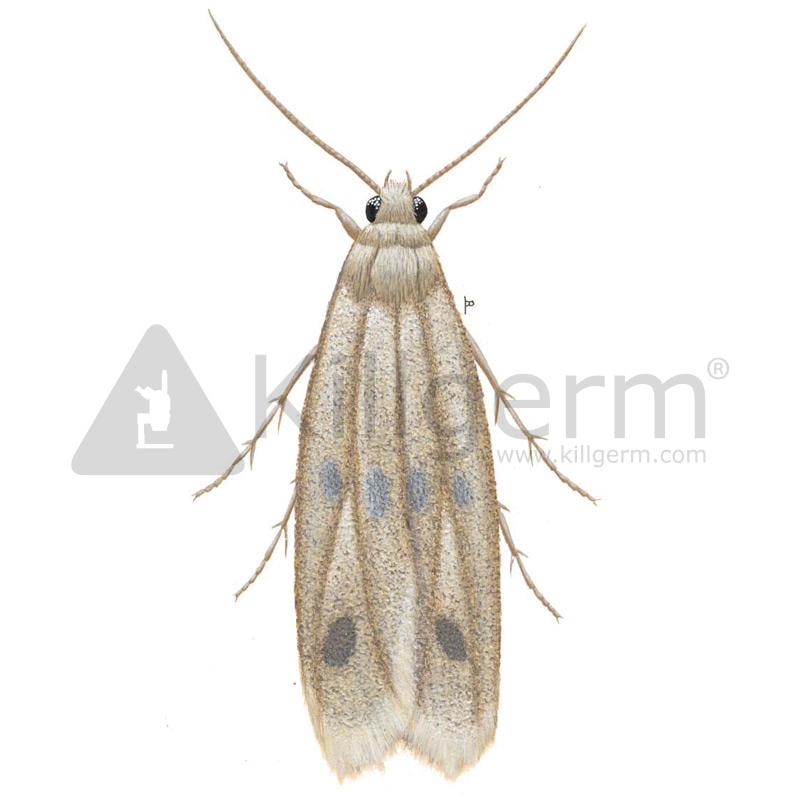
Case-bearing clothes moth
Latin
Tinea pellionella
Stats
Body length 3.5 and 4 mm.
Wingspan 10 – 15 mm.
Appearance
The upper side of the forewings is pale brown with three darker spots on the wings. Both pairs of wings have fringed margins. The larva has the habit of carrying a silken tube and often attached to it are particles of wool, fibres, etc from the immediate habitat. The case is open at both ends and the larva is rarely found outside it.

Indian meal moth
Latin
Plodia interpunctella
Stats
Open wing span – approx. 16 mm.
Appearance
The forewing has a broad grey band across the bronze brown wings. In common with other moth species, wing scales are readily lost and wing pattern is therefore an unreliable characteristic for identification.